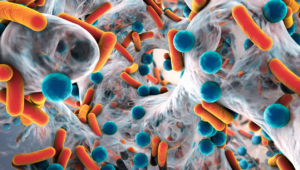
This matrix provides constitutive members with a potent defense against antibiotics and immune systems. While 99% of all bacteria exist in biofilms, antimicrobial research has historically focused on the effects of antibiotics on solitary bacteria, leading to serious over estimation of antimicrobial efficacy in chronic infections.
Further complicating matters, biofilms form beneath the wound surface and may escape swab culture detection, leading to bio-burden under estimation and subsequent under-treatment of a clinically relevant infection. Biofilms are involved in 60-80% of persistent infections, and is one of the leading causes of hospital-acquired infections. Successful biofilm eradication is a key aspect of infection resolution and timely wound healing.
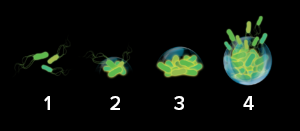
In the earliest stage of growth, bacteria are free-floating and live independently making it easier to control them with normal antibiotics treatments.
When bacteria mature, they collect and form a protective shield called biofilm. At this stage it becomes difficult to kill bacteria with traditional antibiotics.
While protected by biofilm, bacteria colonize rapidly and begin to behave as a group making them significantly stronger and resistant to antibiotics.
When fully mature, bacteria living within biofilm disperse free-floating bacteria which repeat the cycle as they colonize and produce biofilm.